 SAVE FROM 20 to 35%

FREE DELIVERY
for orders over 31 £
 MONEY BACK GUARANTEE
Currency:









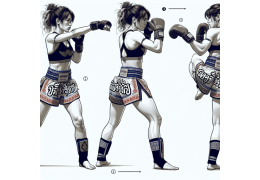

Understanding the Eight Limbs: A Guide to Muay Thai Techniques (part 2)
Mastering the Eight Limbs: A Breakdown of Muay Thai Strikes
By the time we're done, you'll be seeing the human body in a whole new light. Who knew you had so many weapons at your disposal?
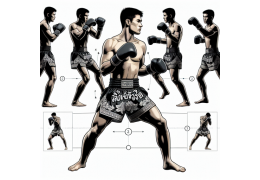
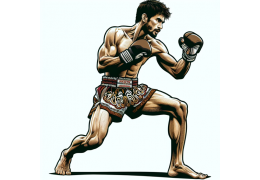
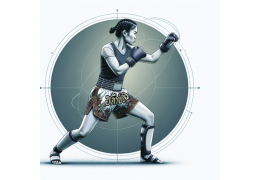
Fists of Fury: The Art of Punching in Muay Thai
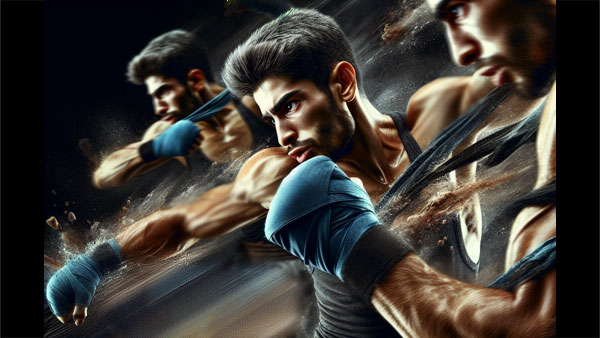
Let's start with something familiar – good old-fashioned punching. But don't be fooled, Muay Thai punches are a whole different ball game compared to your average barroom brawl.
In Muay Thai, we've got four main punches: the jab, the cross, the hook, and the uppercut. Each one is a different flavor of ice cream – delicious on its own, but even better when combined!
The jab is your speedy little friend, perfect for keeping opponents at bay or setting up bigger strikes. The cross? That's your power punch, coming straight from your rear hand like a freight train. Hooks and uppercuts are your close-range destroyers, perfect for when things get up close and personal.
Remember, in Muay Thai, punches aren't just about arm strength. It's all about rotating your hips, transferring power from the ground up.
It feels as if your entire body is a large spring, gathering and then releasing powerful energy through your fist.
Now that's what I call a knockout punch!
Kick It Up a Notch: The Devastating Power of Muay Thai Kicks
Now we're getting to the good stuff! Muay Thai kicks are legendary for a reason. They're not just powerful – they're downright devastating when landed correctly.
The star of the show is the roundhouse kick. It's a baseball bat made of flesh and bone, capable of felling opponents like trees. The key? It's all in the hip rotation and the follow-through. You're not just kicking with your leg – you're whipping your entire body into the strike.
But let's not forget about the teep, or push kick. It might not look as flashy as a roundhouse, but it's incredibly effective. Think of it as a long-range jab with your foot. It's perfect for maintaining distance, disrupting your opponent's rhythm, or just plain annoying them. Trust me, after eating a few solid teeps to the stomach, your opponent will think twice about charging in!
Elbows: The Secret Weapons of Close-Range Combat
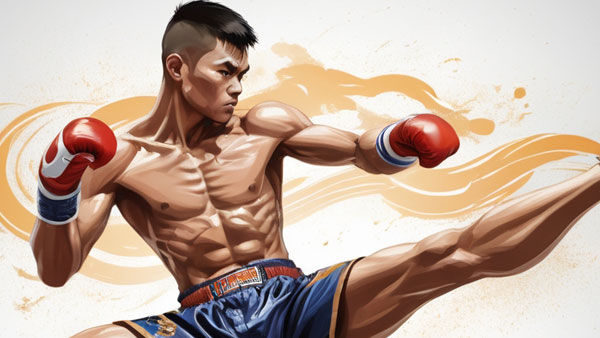
Alright, now we're getting into the really fun stuff. Elbows in Muay Thai are like the Swiss Army knives of striking – versatile, compact, and surprisingly effective.
Elbow strikes come in all shapes and sizes. You've got your horizontal elbows, perfect for close-range mayhem. Then there's the diagonal upward elbow, sneaking in under your opponent's guard like a sneaky little ninja. And let's not forget about the spinning elbow – it's like a ballerina pirouette, only with more potential for knockouts.
The beauty of elbow strikes? They're incredibly hard to see coming, and they can generate a ton of power in a very short distance. Plus, they're perfect for causing cuts. In a sport where fights can be stopped due to cuts, a well-placed elbow can be a game-changer.
Knees: The Battering Rams of Muay Thai
If elbows are the scalpels of Muay Thai, knees are the sledgehammers.
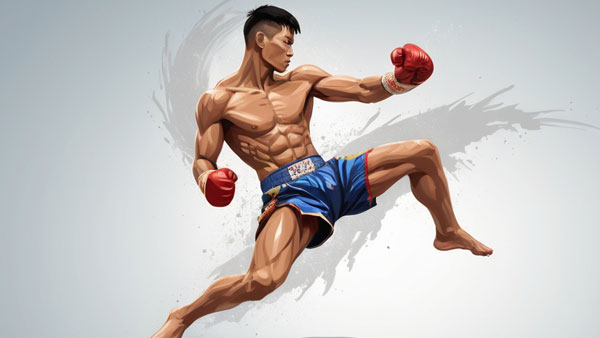
Knee strikes are devastating in close range, especially in the clinch. A well-placed knee to the body can knock the wind out of your opponent faster than you can say "Ouch!" And don't even get me started on flying knees – they're like something out of a kung fu movie, only real and twice as awesome.
The key to effective knee strikes? It's all about timing and positioning. You need to pull your opponent into the strike while simultaneously driving your knee upward.
So there you have it – the eight limbs of Muay Thai laid bare. Each one is a weapon in its own right, but the true magic happens when you start combining them.
Remember, mastering these techniques takes time, patience, and a whole lot of practice. But trust me, the first time you land that perfect combination – maybe a jab, cross, low kick followed by a spinning elbow – you'll feel like a Muay Thai god.
The Art of Defense: Blocking, Parrying, and Evading in Muay Thai
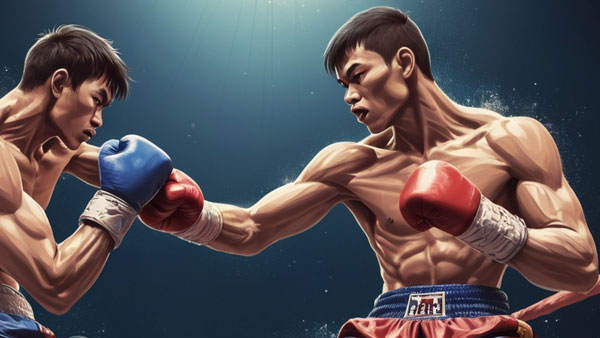
Alright. We've talked about dishing out the pain, but what about avoiding it? After all, as the old saying goes, "The best offense is a good defense." Or was it the other way around? Either way, in Muay Thai, being able to protect yourself is just as important as being able to land those killer strikes.
The Shield: Mastering the Art of Blocking
First up in our defensive arsenal is blocking. "Blocking? That's easy! I'll just put my arms up and hope for the best!" Well, hold your horses there, champ. Muay Thai blocking is an art form in itself.
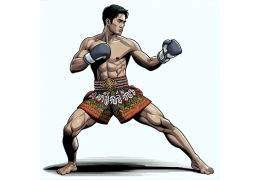
In Muay Thai, we use what's called the "high guard" position. Your hands are up by your temples, elbows tucked in to protect your ribs. It's like you're giving yourself a perpetual hug – only this hug can save you from a nasty knockout!
In Muay Thai, we don't just block with our arms. Oh no, that would be too easy! We use our shins to block low kicks, our forearms to deflect punches, and even our shoulders to shrug off head kicks. Your entire body becomes a living, breathing shield.
The key to effective blocking? It's all about absorbing the impact. You're not trying to stop the strike dead in its tracks – that's a good way to end up with broken bones. Instead, you're redirecting the force, letting it slide off you quickly forgotten and disregarded. It takes practice, but once you've got it down, you'll feel like a human fortress!
The Matador: The Fine Art of Parrying
Next up, we've got parrying. If blocking it’s being a shield, parrying it’s being a matador.
Parrying is all about redirecting your opponent's strikes. Instead of absorbing the impact, you're guiding it away from you. A traffic cop for punches and kicks. "Oh, you wanted that punch to land on my face? How about over here instead?"
The beauty of parrying is that it sets you up perfectly for counterattacks. By redirecting your opponent's strike, you're often leaving them open and off-balance. It's the perfect opportunity to unleash some of those devastating techniques we talked about earlier. Parry a punch, counter with an elbow – now that's Muay Thai poetry in motion!
The Ghost: Mastering the Art of Evasion

Now we've got evasion.
Evasion in Muay Thai comes in many forms. You've got your basic head movement – slips, rolls, and ducks. Then there's footwork – stepping back, side-stepping, or pivoting out of the way. And let's not forget about the lean back – it's not just a cool dance move, it's a great way to avoid a high kick!
The key to effective evasion? It's all about reading your opponent. You need to be able to anticipate their strikes before they even throw them. All about being a mind reader.
But here's the real secret to Muay Thai defense – it's not using just one of these techniques. The true masters can seamlessly flow between blocking, parrying, and evading. One moment they're blocking a kick, the next they're parrying a punch, and then suddenly they're not there at all!
Remember, in Muay Thai, defense isn't just about avoiding damage. It's about creating opportunities. Every block, parry, or evasion is a chance to counter-attack. It's like turning your opponent's energy against them – very Zen, if you think about it.
Master these techniques, and you'll be harder to hit than a mosquito on a trampoline. There's nothing more satisfying than seeing your opponent's frustration grow as they realize they just can't touch you.
Related posts
-
Understanding the Eight Limbs: A Guide to Muay Thai Techniques (part 1)
Imagine transforming your body into a living, breathing weapon, where every limb becomes a potential strike point....Read more
-
Understanding the Eight Limbs: A Guide to Muay Thai Techniques (part 3)
The clinch in Muay Thai is like a chess match played at extremely close quarters, with the added excitement of...Read more
-
Understanding the Eight Limbs: A Guide to Muay Thai Techniques (part 4)
It's time to talk about the not-so-glamorous but absolutely crucial part of the journey – training and conditioning....Read more
-
The Role of Mental Toughness in Muay Thai Training and Competition (part 1)
We've got the million-dollar questions: "Why do some fighters seem unshakeable under pressure?" and "How do certain...Read more
-
The Role of Mental Toughness in Muay Thai Training and Competition (part 2)
Picture this: You're a Muay Thai fighter, and your pre-fight jitters are doing the cha-cha in your stomach. It's time...Read more
-
Confronting Challenges: Your Path to Amazing Growth
Building on mental strength leads to something powerful. You develop the ability to face challenges head-on. This...Read more
-
Discipline: Rituals, Habits, and Consistency
Training builds more than fighting skills. It shapes your character. The small efforts you repeat become steady...Read more
-
Recovering from Setbacks and Growing Stronger
Discipline teaches you to show up. But what happens when things go wrong? Setbacks aren't dead ends. They're chances...Read more
Leave a comment